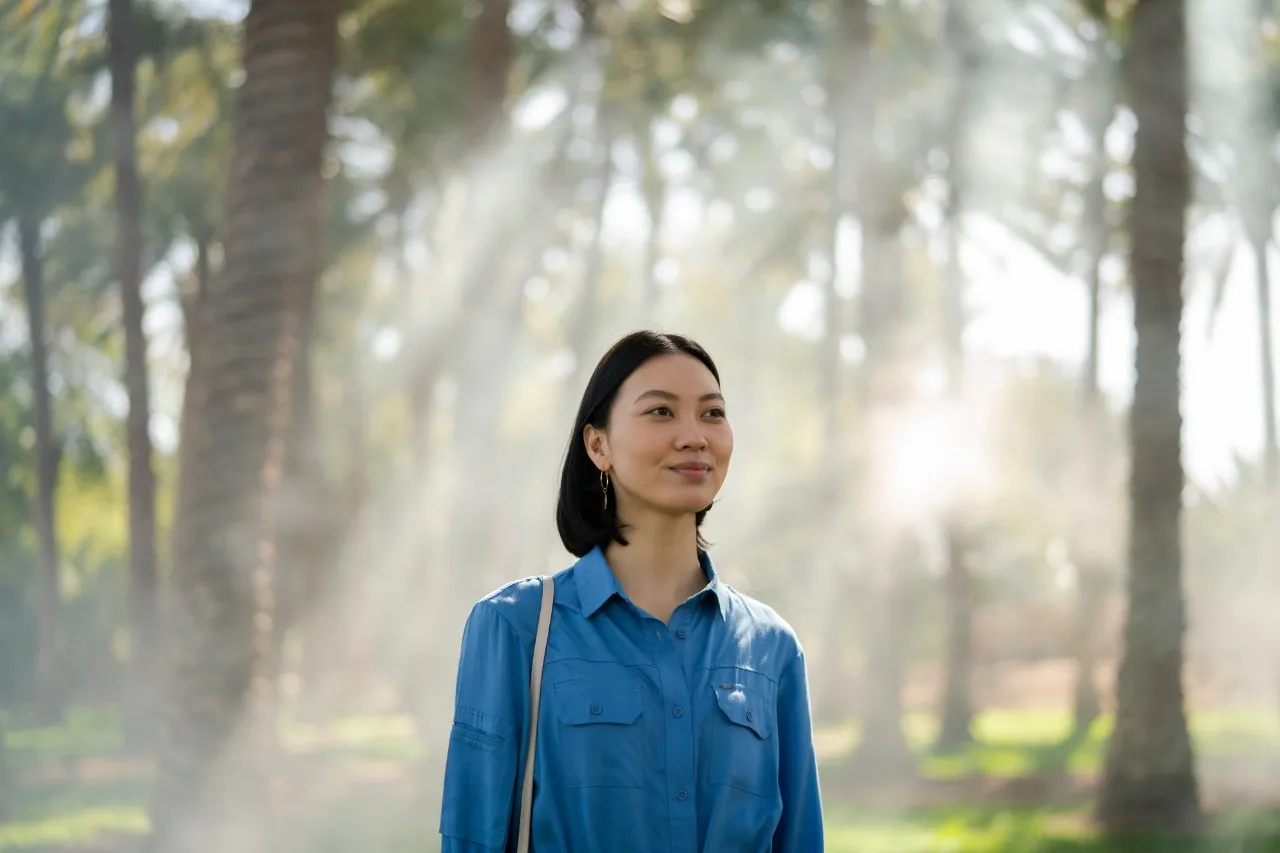
If you have not yet heard of AlUla, you will. Tucked into the northwest corner of Saudi Arabia, this 200-kilometre valley holds one of the densest concentrations of ancient heritage anywhere on earth — Nabataean tombs rivalling Petra, inscriptions older than the Roman Empire, and a landscape so vast and strange it feels borrowed from another planet. Yet unlike Petra, the Pyramids, or Angkor Wat, AlUla receives a fraction of the visitors. For now, it remains one of the rare places where you can stand before a 2,000-year-old monument and hear nothing but the wind.
This guide covers everything you need to plan a visit — what to see, where to stay, when to go, and how to experience AlUla with the depth it deserves.
AlUla is not a single site. It is an entire landscape layered with human history stretching back at least 7,000 years. The valley functioned for millennia as a crossroads on the Incense Road — the ancient trade route that carried frankincense and myrrh from southern Arabia to the Mediterranean world. Successive civilisations settled here, drew water from the oasis, carved their names into the rock, and eventually moved on, leaving behind an archaeological record of extraordinary richness.
The result is a place where you can visit a 3,000-year-old kingdom in the morning, a 2,000-year-old Nabataean city in the afternoon, and a 900-year-old abandoned town before dinner — all within a thirty-minute drive. That density of heritage, set against a backdrop of towering sandstone formations and golden desert, is what makes AlUla genuinely unlike anywhere else.
AlUla's heritage sites span several distinct civilisations and periods. Here are the ones that define a visit.
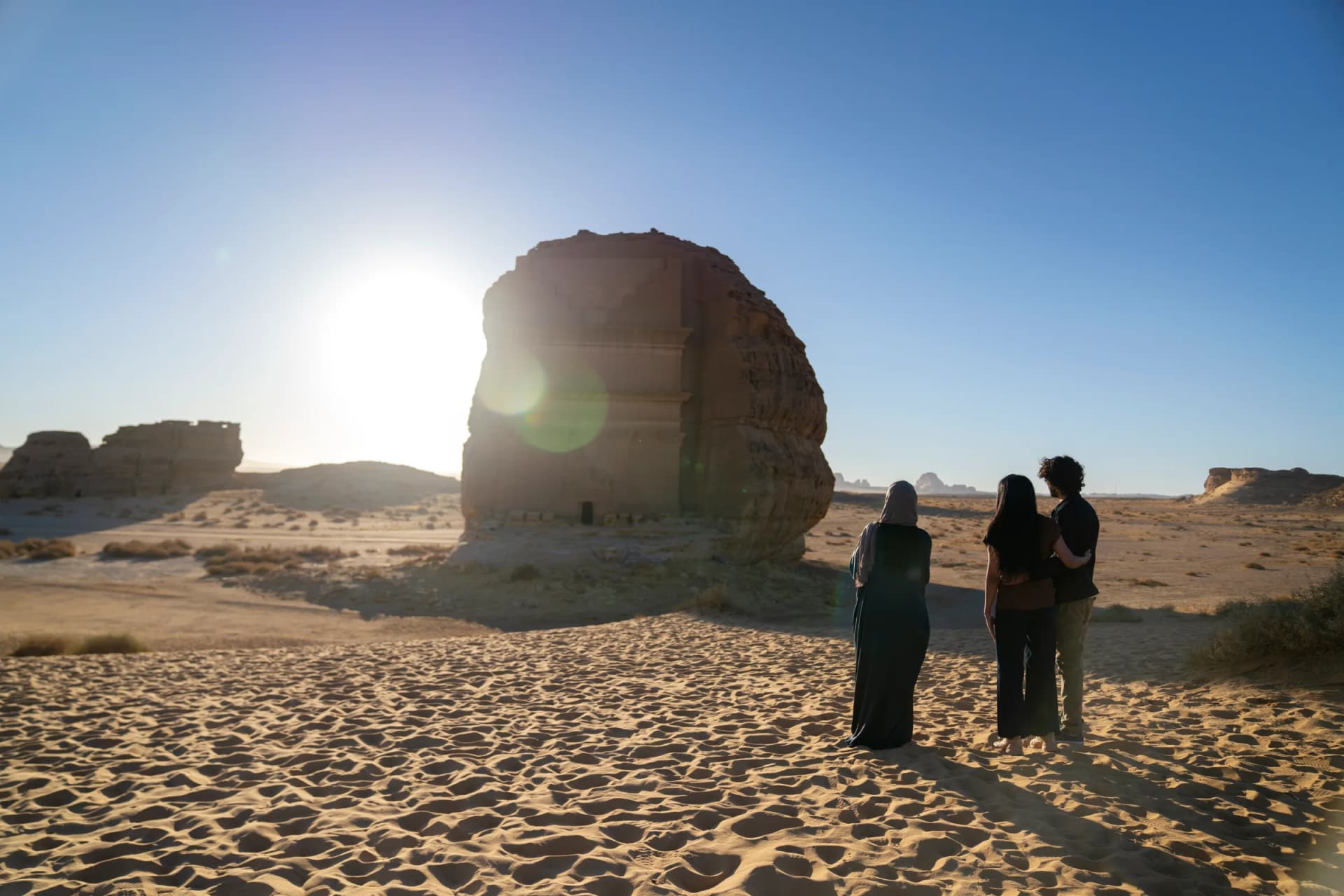
Hegra is the reason most travellers come to AlUla, and it delivers on every expectation. Saudi Arabia's first UNESCO World Heritage Site, designated in 2008, Hegra was the southern capital of the Nabataean kingdom — the same civilisation that built Petra in modern-day Jordan. More than 110 monumental rock-cut tombs stand across the site, their carved facades still bearing the names, titles, and inheritance instructions of the merchants and officials who commissioned them between the 1st century BCE and the 1st century CE.
The most photographed tomb is Qasr al-Farid — the Lonely Castle — a single enormous facade carved from a freestanding rock pinnacle, left unfinished by its Nabataean sculptors and all the more haunting for it. But the site rewards a full day of exploration: the Qasr al-Bint cluster, with its carved eagles and Medusa reliefs; the Diwan, a sacred banquet chamber cut into the rock; and the sophisticated water management system that channelled rainfall through rock-cut channels to irrigate the settlement.
“Hegra has everything Petra has — the scale, the craftsmanship, the sheer audacity of carving a city from living rock — but with something Petra lost decades ago: silence. You can hear your own footsteps echo off the tomb facades.”
— Nia, Nia Travels
Predating even the Nabataeans, the ruins of Dadan reveal the remains of the Dadanite and later Lihyanite kingdoms — powerful trading states that controlled the Incense Road from at least the 9th century BCE. The site's lion tombs, carved high into the sandstone cliff face, are among the most striking images in Arabian archaeology. Nearby, Jabal Ikmah is an open-air gallery of thousands of rock inscriptions in Ancient North Arabian, Aramaic, and Minaic scripts — personal prayers, trade records, and travellers' notes that together form one of the most significant epigraphic collections on the Arabian Peninsula.
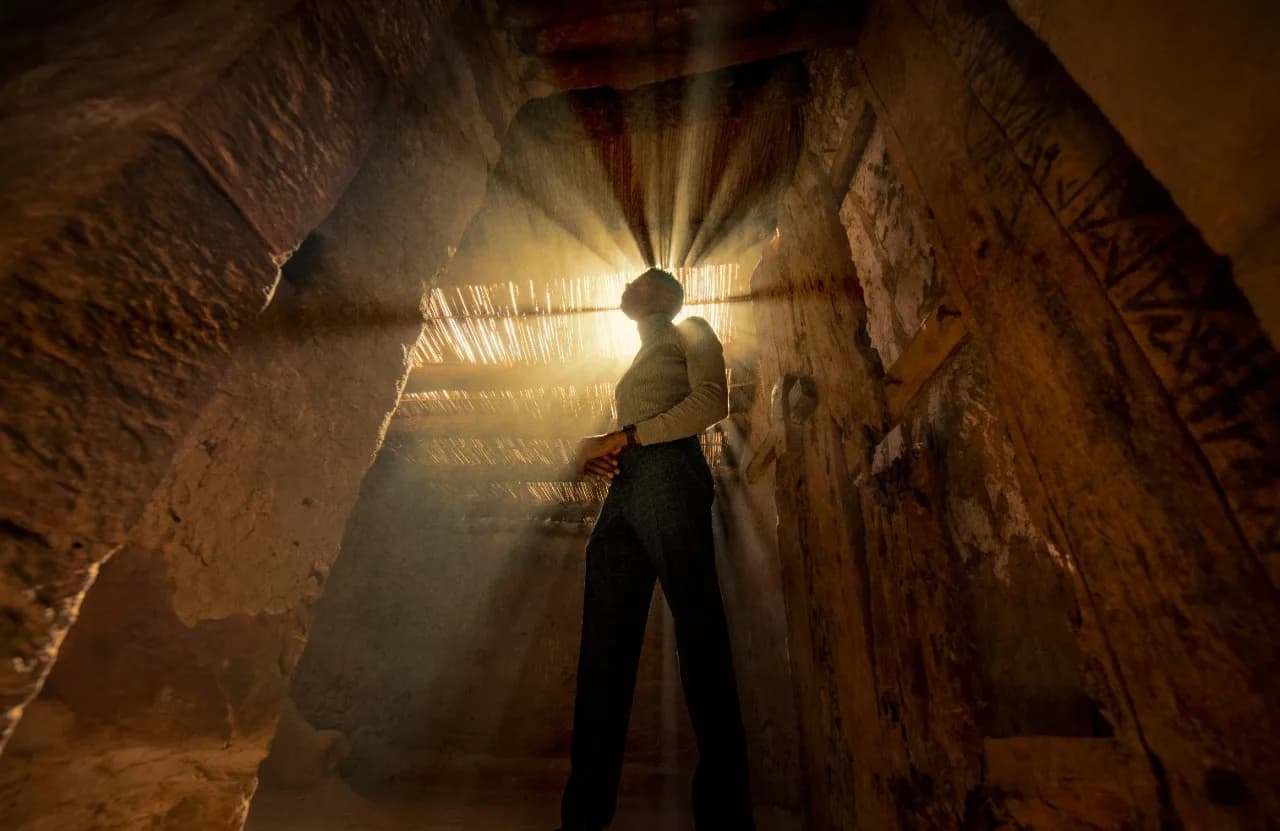
A mud-brick settlement of nearly 900 houses, mosques, and markets, AlUla Old Town was continuously inhabited for more than 900 years before its residents relocated to the modern town in the 1980s. Walking its narrow alleyways — some barely wide enough for two people — gives an immediate, visceral sense of how life was lived in a traditional Arabian oasis settlement. The town is undergoing careful restoration and is already one of the most atmospheric places in the valley.
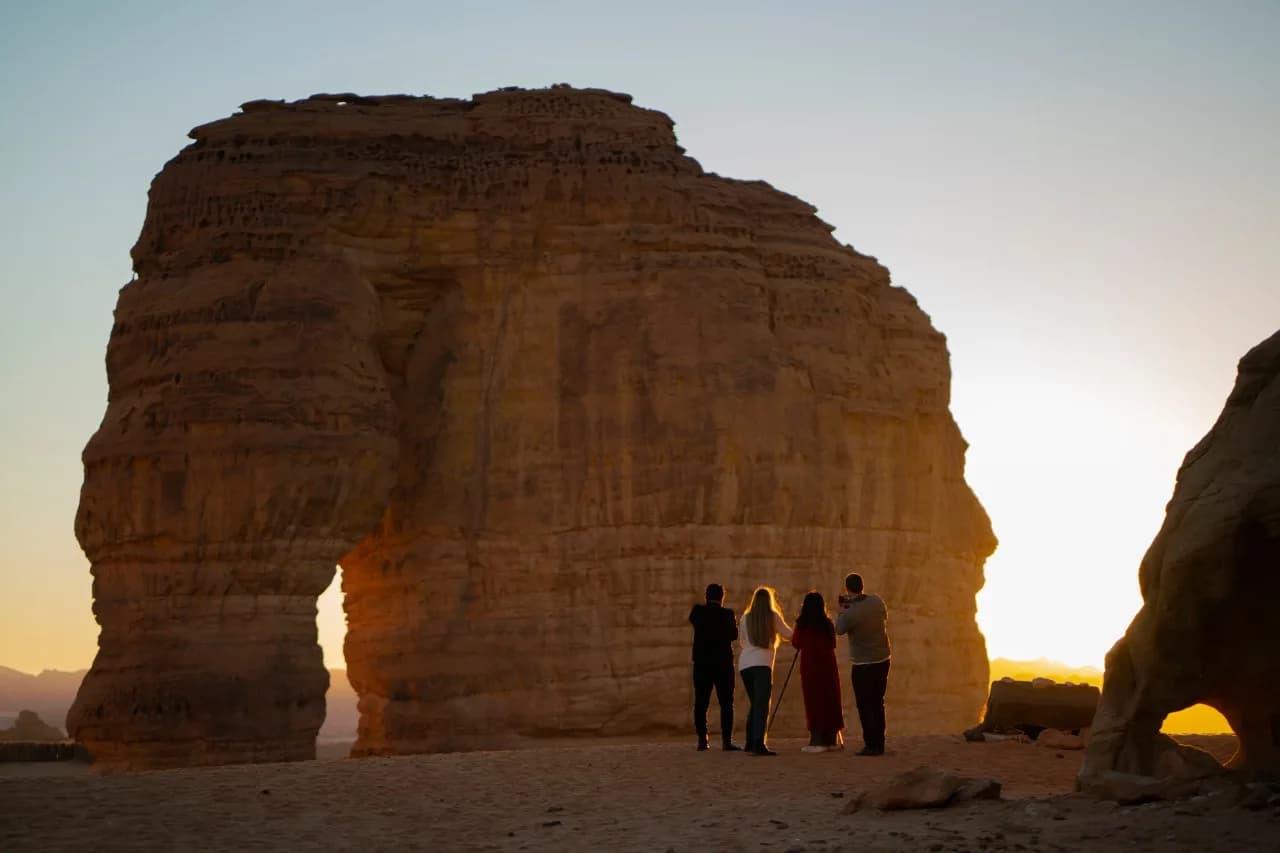
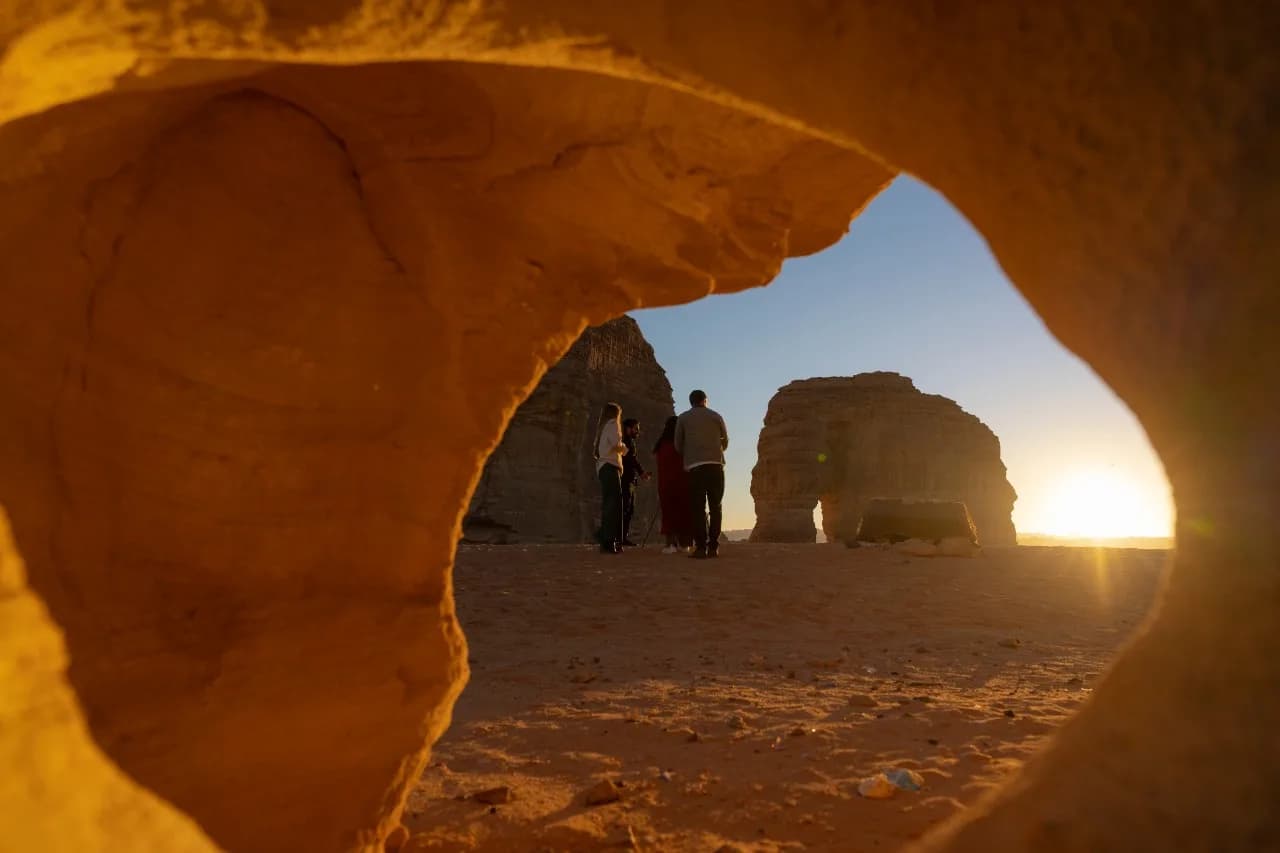
This 52-metre freestanding sandstone monolith, sculpted by wind erosion into the unmistakable shape of an elephant, has become AlUla's most recognisable landmark. It is best visited at sunset, when the rock shifts through amber and deep ochre against the darkening sky. A small outdoor lounge at its base serves coffee and light refreshments — a good place to end a day of heritage exploration.
AlUla's accommodation scene has developed rapidly but deliberately. The focus is on low-impact, landscape-integrated properties that complement the setting rather than competing with it.
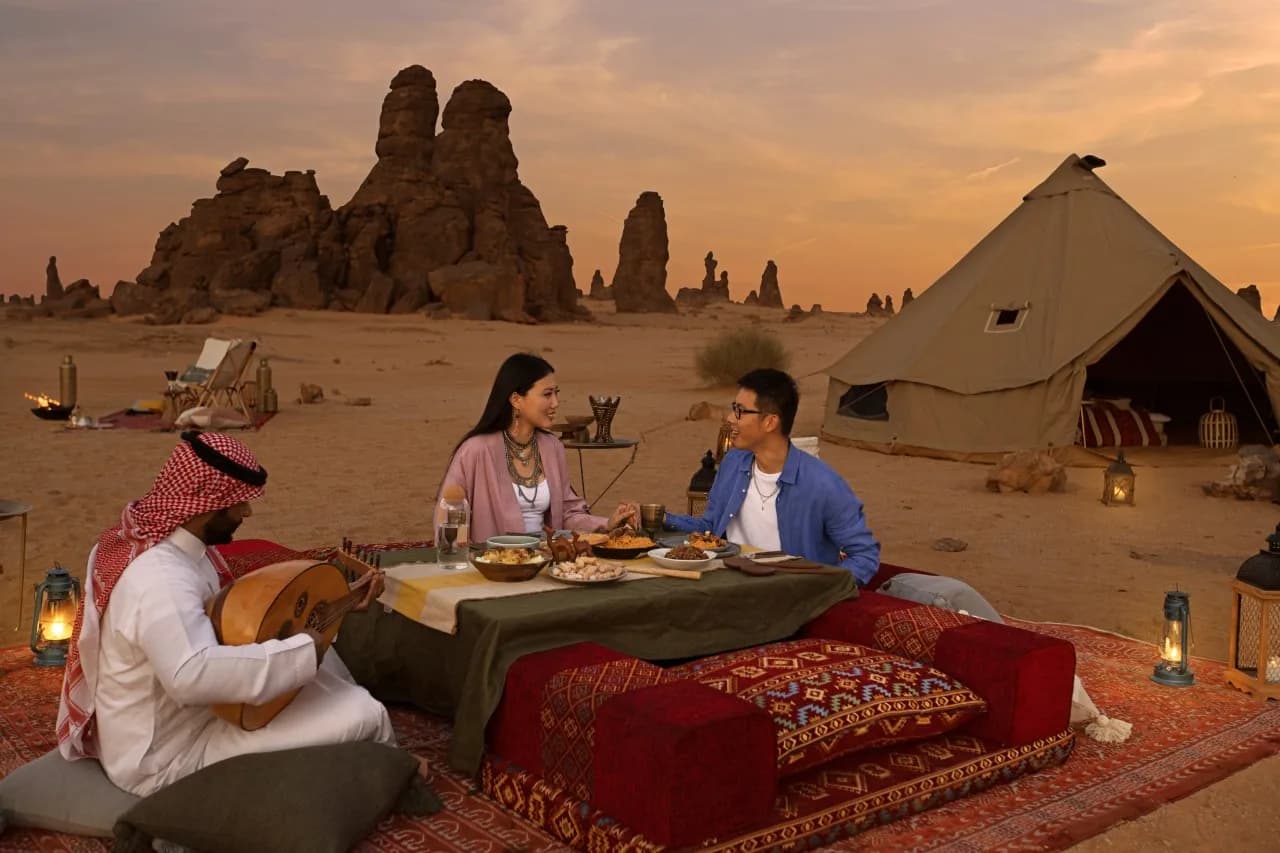
The best time to visit AlUla is between October and March, when daytime temperatures are comfortable for outdoor exploration — typically 20-28°C. December through February is peak season, coinciding with the annual AlUla Moments festival programme, which brings live music, contemporary art installations, and cultural events to the valley. The shoulder months of October and March offer slightly warmer weather with fewer visitors. Summer temperatures exceed 40°C and are not recommended for heritage touring.
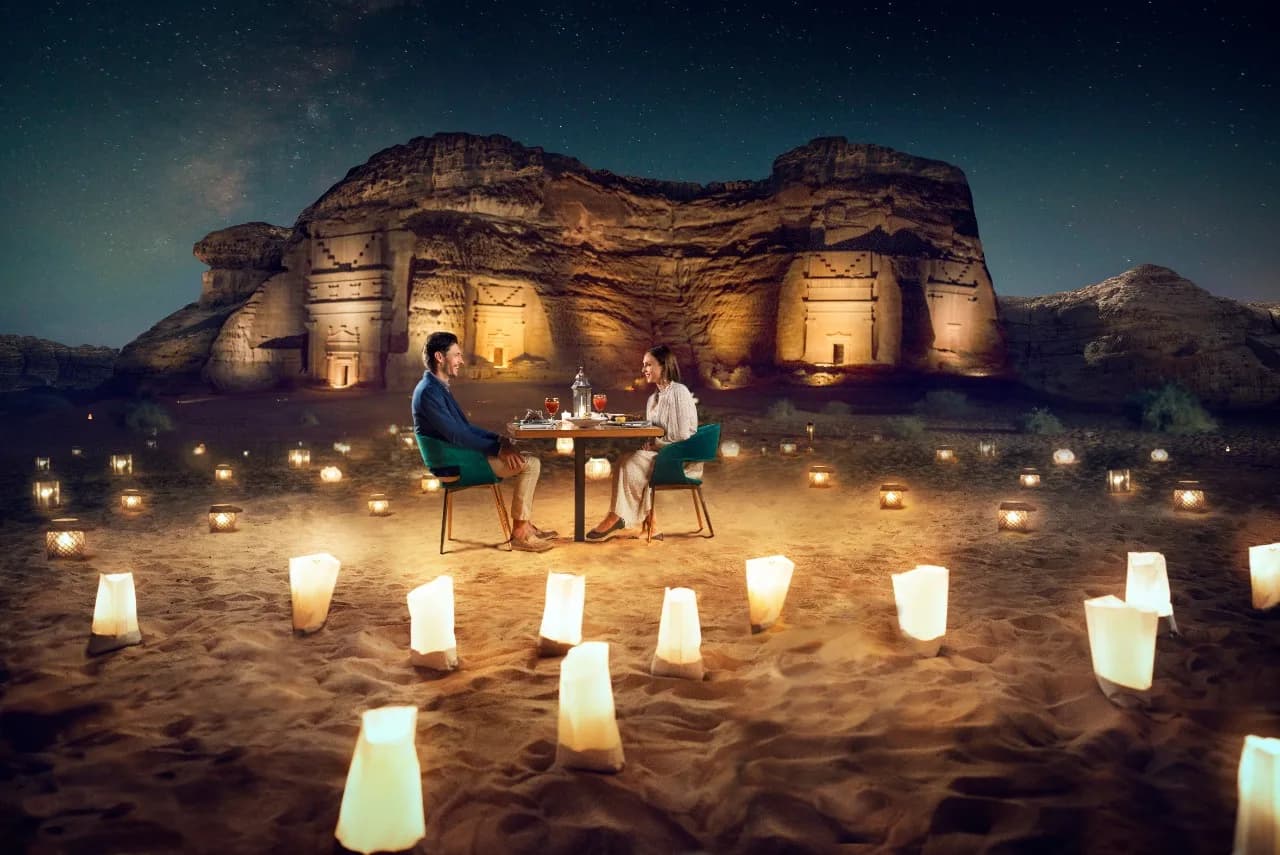
Three nights is the minimum for a meaningful visit — enough to cover Hegra, Dadan, Jabal Ikmah, and the Old Town without rushing. Four or five nights allow time for a hot air balloon flight, a desert dinner, stargazing, and the kind of unstructured exploration that often produces the best memories. AlUla rewards patience. The longer you stay, the more the landscape reveals.
AlUla has its own airport (ULH) with domestic connections from Riyadh and Jeddah. During peak season, some international charter flights operate directly. The drive from Jeddah takes approximately six hours through dramatic Hejaz mountain scenery — a beautiful but long journey best suited to travellers with time and a tolerance for desert driving. Most visitors arrive by domestic flight and use private transport within the valley.
AlUla is the anchor of several of our heritage itineraries — from a focused five-day desert adventure to a ten-day journey that combines Al-Balad, AlUla, Hegra, and the Red Sea coast. Every itinerary includes private transport, expert heritage guides, and handpicked accommodation. If you are considering AlUla as part of a wider journey through Saudi Arabia, we can help you design an itinerary that connects the valley's ancient heritage with the rest of the kingdom's most rewarding destinations.
January 2026
Share your travel preferences and Nia will personally design your itinerary. No commitment, no booking pressure.
Fill out the form below and we'll get back to you with a personalized itinerary.